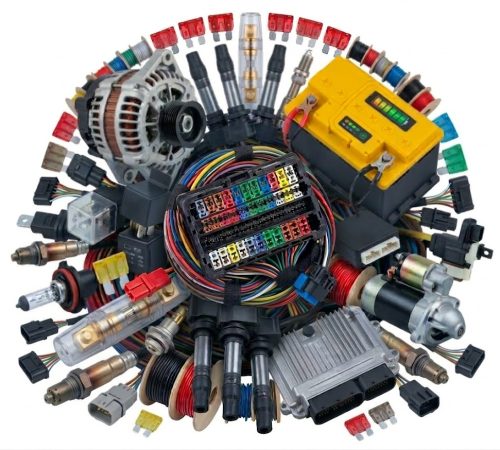
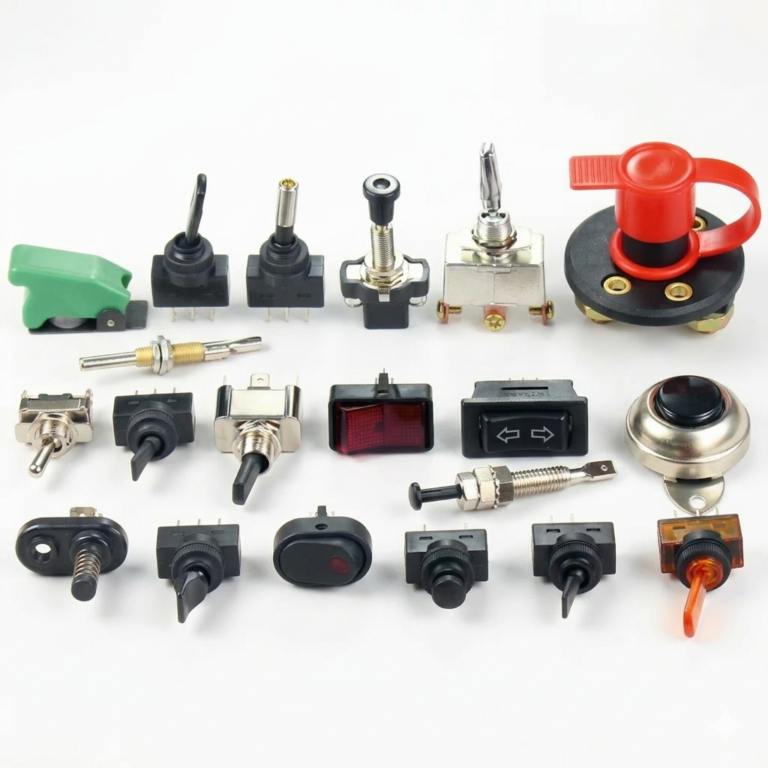
Switches & ControlsIgnition, toggle, pressure, and cut-off switches, along with indicators, gauges (temperature, fuel, voltmeter), and hourmeters.

Ignition & Toggle Switches
These components act as the gatekeepers of electrical flow, moving the machine from a cold state to active operation.
-
Ignition Switch: Usually a multi-position key or push-button. It sequences the power from “Off” to “Accessories,” “Glow/Pre-heat” (for diesels), and finally “Start.”
-
Toggle Switches: These are the manual overrides for auxiliary systems. They are used for lighting, fans, or hydraulic locks. They provide tactile feedback, allowing operators to feel the “click” even while wearing gloves.
Safety Sentinels: Pressure & Cut-off Switches
These are your first line of defense against catastrophic mechanical failure.
-
Pressure Switches: These monitor fluids like oil or coolant. If the pressure drops below a safe threshold (e.g., in the engine lubrication system), the switch triggers a warning or shuts the system down.
-
Cut-off (Kill) Switches: These are emergency “Stop” buttons. Designed for immediate power disconnection, they bypass all other electronics to kill the engine or motor instantly in an emergency.
The Clock: Hourmeters
Unlike a car that uses a physical odometer (miles/kilometers), stationary and heavy equipment uses an Hourmeter.
-
Why it matters: It tracks the total “engine-on” time.
-
Maintenance: Most service intervals (oil changes, filter replacements, valve adjustments) are dictated by these hours rather than distance.
Pro-Tip: The “Pre-Start” Scan
Before cranking the ignition, always check that the voltmeter shows battery health and that the oil pressure indicator lights up (it should turn off once the engine starts and pressure builds).